Physical Address
304 North Cardinal St.
Dorchester Center, MA 02124
Physical Address
304 North Cardinal St.
Dorchester Center, MA 02124

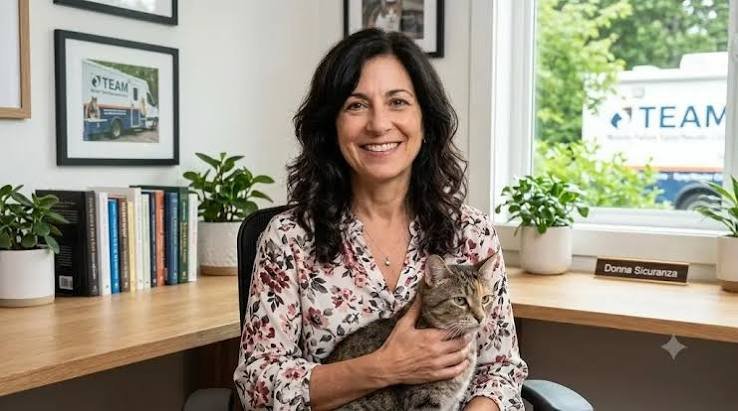
A green-and-white vehicle rolls into a Connecticut parking lot just after 8 a.m. Staff set up the waiting area and the surgery space. About an hour later, cat owners arrive with carriers in their hands. A Patch reporter counted 29 of them at one stop in Vernon. Donna Sicuranza helps make that scene happen. She is the Executive Director of Tait’s Every Animal Matters, known as TEAM. This Connecticut nonprofit runs the TEAM Mobile Feline Spay/Neuter Clinic from Westbrook, Connecticut. People search her name because they want to know who leads the charity. Some also find her listed as Donna Sicuranza Marconi, the name on TEAM’s staff page. She is a nonprofit executive, not a celebrity. Her public story centers on feline welfare, affordable care, and steady work. This article sticks to what reliable sources support. It also flags what they do not.
| Detail | What public sources show |
|---|---|
| Name | Donna Sicuranza (TEAM’s staff page lists Donna Sicuranza Marconi) |
| Role | Executive Director, Tait’s Every Animal Matters |
| Base | Westbrook, Connecticut |
| Best-known program | TEAM Mobile Feline Spay/Neuter Clinic |
| Clinic start | 1997 |
| Reported impact | More than 225,000 cats spayed or neutered and vaccinated |
| Earlier work | Freelance writing, editing, and public relations |
Before she led TEAM, Sicuranza worked as a freelance writer, editor, and public relations specialist. Professional listings place that work between 1983 and 1997 in Connecticut and New York. The same listings show English degrees, with a bachelor’s from Fairfield University and further study at Trinity College-Hartford. TEAM’s own pages support the communications link. A 2019 TEAMWORKS newsletter reportedly names her as editor and carries her direct notes to readers. That editorial work fits her current job. A charity that lives on donor support must explain its mission in plain words. Writing and editing skills help with newsletters, grant letters, and press contacts. A public relations background also helps when people ask why surgery on a mobile unit is safe. Exact job titles from those early years are not public. Treat the listings as helpful clues, not final proof.
Tait’s Every Animal Matters is an animal-welfare charity based in Westbrook. It is a 501(c)(3) organization, so gifts to it are tax-deductible. Nonprofit databases also list the charity under the legal name Vernon Tait All Animal Adoption Preservation Team. TEAM has one stated goal. It wants to spay or neuter as many cats as possible before they can reproduce. That narrow focus sets it apart. TEAM presents itself as a specialist, not a shelter or a full hospital. A Patch report says the group does not want to replace traditional vets and urges owners to keep using them for everyday needs. TEAM steps in where cost blocks care. Its main tool is a mobile veterinary clinic that brings cat sterilization and vaccination to towns across the state. The official site calls it the first and only clinic of its kind in Connecticut.
TEAM’s public history places the planning in 1996. The mobile clinic hit the road on March 1, 1997. That launch gave Connecticut a new kind of service. Reporters describe it as a veterinary hospital on wheels. The vehicle looks like a bus, but only its chassis comes from one. The rest is a working clinic where staff spay, neuter, and vaccinate cats. Since that first year, the clinic has kept one job. It offers affordable spay/neuter services and vaccines for cats. TEAM says its small, dedicated veterinary staff has spent more than 25 years on the road. Several profiles say Sicuranza became Executive Director in March 1997, the same month the clinic started. The model stayed simple, and that simplicity explains its staying power. A mobile spay/neuter clinic can go where the cats are. Owners get low-cost care close to home, and the charity keeps its focus sharp. Donna Sicuranza: TEAM Leadership and Connecticut Cat Welfare Work – Its Released +3
John Caltabiano appears in TEAM’s history as a veterinarian who helped plan the mobile clinic. TEAM’s public history credits John A. Caltabiano, DVM, and Sicuranza with the 1996 planning that led to the 1997 launch. The pairing made sense. He brought the medical view. She brought the writing, outreach, and organizing skills. Together they turned an idea into a clinic that ran on a fixed schedule. Some sources call them co-founders. Others describe her as the executive director from the start. Public records do not settle the exact wording, so this article avoids labeling either person as the sole founder. What the sources agree on is the partnership. A veterinarian and a communicator built a program that busy, cost-conscious owners could actually use. That mix of medical skill and clear messaging still shapes how TEAM speaks to the public. Skip any claim about his personal life unless a reliable source backs it.
The clinic sells a simple package. TEAM’s site says the spay/neuter package includes a brief exam, vaccines, a nail trim, and ear mite treatment when a cat needs it. The vaccines cover rabies, distemper, and upper and lower respiratory infection. Staff also offer a kitten package, booster shots, and parasite prevention and treatment. This bundle turns one visit into preventive veterinary care. A cat leaves sterilized and protected, and owners skip extra appointments. That design also widens vaccination access. Bundling helps owners who might delay a separate cat vaccination visit. Here is what a typical visit covers: everyanimalmatters
Fees change over time, so call 1-888-FOR-TEAM for the current price.
TEAM says the clinic visits many cities and towns. The schedule shifts, so owners should call or check the site for current mobile clinic locations. A Patch story showed two typical stops: a Tractor Supply lot in Vernon and a shopping plaza in Newington. Parking lots work well because people already know them and can drive in easily. Rural communities near a stop can reach care without a long trip to a distant hospital. That reach makes a real difference for accessible veterinary services. The clinic serves Connecticut residents and their cats, whether pets or feral. Appointments run through the office line at 860-399-5569 or the toll-free number. Clinic days draw crowds. At the Vernon stop, nearly thirty owners arrived within about an hour, and many early patients in Newington came for booster shots.
TEAM has backed Trap Neuter Release, or TNR, from the start. Its TNR program rests on a clear belief: this is the most humane and effective way to shrink feral cat numbers. Feral cats often live in unmanaged outdoor colonies, and unspayed females can produce litter after litter. A Hartford volunteer told the Courant that one feral female can have three litters a year and up to 200 kittens in her life, though she called that a rough estimate. TNR breaks the cycle. A caretaker uses humane trapping, brings the cat to the clinic, and returns it to its colony afterward. TEAM also runs the TEAM Incentive Program, or TIP, one of its feral-cat programs. This partial rebate program repays cat caretakers for part of the fee. As of the 2019 newsletter, a cat must meet three rules:
Staff check each cat on surgery day, and approved rebates arrive by mail within about two weeks. That is feral-cat advocacy at its most practical. It pays people for hard work. Rules may have changed since 2019, so confirm before you set traps.
TEAM says its veterinarians have sterilized and vaccinated more than 225,000 cats since 1997. Older pages cite a figure above 200,000, so the total has grown. The number counts cats treated on board. It does not measure the size of Connecticut’s cat population. That difference matters, because the figure shows work done, not a proven drop in every county. Still, the logic is strong. Each surgery stops future litters at the source. The cumulative sterilization impact of 225,000 procedures likely reaches far beyond the cats on the table. Fewer unplanned litters mean fewer kittens for shelters, rescue networks, and volunteers to handle. That is why TEAM focuses on preventive cat care instead of cleanup after the fact. It works to reduce feline overpopulation before the kittens exist. In plain terms, this is animal population control at the neighborhood level, one cat and one caretaker at a time.
An executive director at a charity this size wears many hats. Donna Sicuranza leads the business side of TEAM. Profiles describe oversight of administration, finances, and promotion, though TEAM does not publish a formal job description. She also acts as an organizational spokesperson. In a Patch interview, she called the work amazing and said it feels rewarding every day, for the cats, owners, and staff alike. Behind the scenes, a mobile program needs constant scheduling logistics, mobile-service logistics, and veterinary staffing. Someone must book stops, plan routes, and keep supplies stocked. Someone must also guide the administrative staff and build donor support. A 2019 newsletter says a grant from the Community Foundation of Eastern Connecticut helps fund the rebate program, which shows how varied that funding can be. Her writing background helps here. Clear appeals bring steady gifts. It also makes TEAM work like a communications nonprofit as much as a medical one.
No public source calls Sicuranza a veterinarian. Her role is leadership and administration. TEAM’s staff page reportedly separates the Executive Director from its medical and veterinary staff. A Medical Director or lead vet, not the executive, decides clinical care. A 2021 Patch story named Dr. Arthur Heller as the primary veterinarian, and he commuted most days from Keene, New Hampshire. Staff change over time, so check TEAM’s current staff page for names. The split works well. Vets focus on surgery and patient safety. She focuses on funding, outreach, and planning. Blurring the two roles would confuse readers and spread false claims. Be careful when a random page calls her Dr. Sicuranza. Nothing in the reliable record supports that title.
Her influence reaches beyond the clinic doors. A 2019 record reportedly shows her representing TEAM at a Connecticut Animal Population Control Program working-group meeting. A seat like that matters in statewide animal-population discussions. TEAM brings nearly 30 years of field experience. State officials, animal-control professionals, and rescue networks bring their own views. Cat policy in Connecticut is patchy. A 2017 Register Citizen report found that Norwalk’s animal control passes cat calls to volunteers, and that the state agriculture department does not regulate feral cats. Volunteers fill the gap. TEAM backs them with lower-cost surgery and rebates. The TEAMWORKS newsletter adds another layer. TEAM sends it out quarterly to donors, cat caretakers, and clinic users. Sicuranza edited the 2019 issue and wrote to readers about the group’s goals. Steady communication like that builds trust across the state.
Search results for her name look messy. Many pages come from content farms that copy each other. Some add details no reliable source confirms, such as marriage dates, family names, or pay figures. Some mix her life with other people’s. Obituary records list a different Donna Sicuranza, reportedly a New York native who died in 2017. She is not the TEAM leader. Other pages carry an author bio about a business research writer whose entrepreneurship coverage spans market trends, business strategies, and industry insights. That writer also produces data-informed articles on modern business concepts. The bio belongs to the page’s author. It says nothing about her. The name question adds more noise. TEAM’s current staff page lists Donna Sicuranza Marconi, while older TEAM materials and news stories use Donna Sicuranza. Most reports treat both names as the same Executive Director. When a page cannot show where a claim comes from, treat that claim with caution.
Public sources cover her work well. They say little about her private life. That gap is normal for a nonprofit leader who keeps the spotlight on her cause. Her date of birth, age, and net worth are not publicly confirmed. Charity tax filings may list executive pay, but pay is not net worth, and no reliable source states her wealth. Family details also sit outside the public record. Any page that names her parents, spouse, or grandchildren without a strong source deserves doubt. Respecting that boundary is part of honest writing. A biography should not fill silence with guesses. Readers trust pages that admit gaps more than pages that invent details. If TEAM or Sicuranza shares more later, this picture will change. The table below separates what sources support from what stays unknown.
| Topic | Status |
|---|---|
| Executive Director role at TEAM | Confirmed by TEAM and news reports |
| Mobile clinic launch in 1997 | Confirmed by TEAM |
| More than 225,000 cats treated | Reported by TEAM |
| Freelance writing and PR career | Reported in professional listings |
| Date of birth and age | Not public |
| Net worth | Not public |
| Family and marriage details | Not confirmed |
Donna Sicuranza does not chase headlines. She runs a charity that does one job and does it well. Since 1997, TEAM has brought cat sterilization, cat vaccination, and basic care to Connecticut towns in a vehicle that parks where owners already shop. Her long-term nonprofit leadership shows how a writer’s skills can power a medical mission. The same story shows the strength of a narrow goal. TEAM never tried to fix every animal problem. It chose feline overpopulation and stayed with it. That sustained animal-welfare work explains the 225,000 figure, which will keep growing while the clinic keeps rolling. Readers who want current schedules, prices, or staff names should go to the source. Call TEAM, read the TEAMWORKS newsletter, and check the official site. Skip the copied bios. The facts are strong enough without extra decoration.
She is the Executive Director of Tait’s Every Animal Matters, a charity based in Westbrook, Connecticut. She leads the group behind the TEAM Mobile Feline Spay/Neuter Clinic. Before that role, she worked as a freelance writer, editor, and public relations specialist.
Most reports say yes. TEAM’s current staff page uses Donna Sicuranza Marconi, while older TEAM materials and news stories use Donna Sicuranza. Both names point to the Executive Director.
TEAM says its veterinarians have spayed or neutered and vaccinated more than 225,000 cats since 1997. Older pages used a figure above 200,000, so the count grows as the clinic keeps running. everyanimalmatters
Yes. TEAM welcomes any Connecticut cat, domestic or feral. Feral cats must arrive in a humane trap, and caretakers may qualify for a partial rebate through TIP. Confirm the current rules by phone before you go. everyanimalmatters
Call 1-888-FOR-TEAM or 860-399-5569, or visit TEAM’s official site. Stops change often, so check before you travel.
Notes on the draft