Physical Address
304 North Cardinal St.
Dorchester Center, MA 02124
Physical Address
304 North Cardinal St.
Dorchester Center, MA 02124

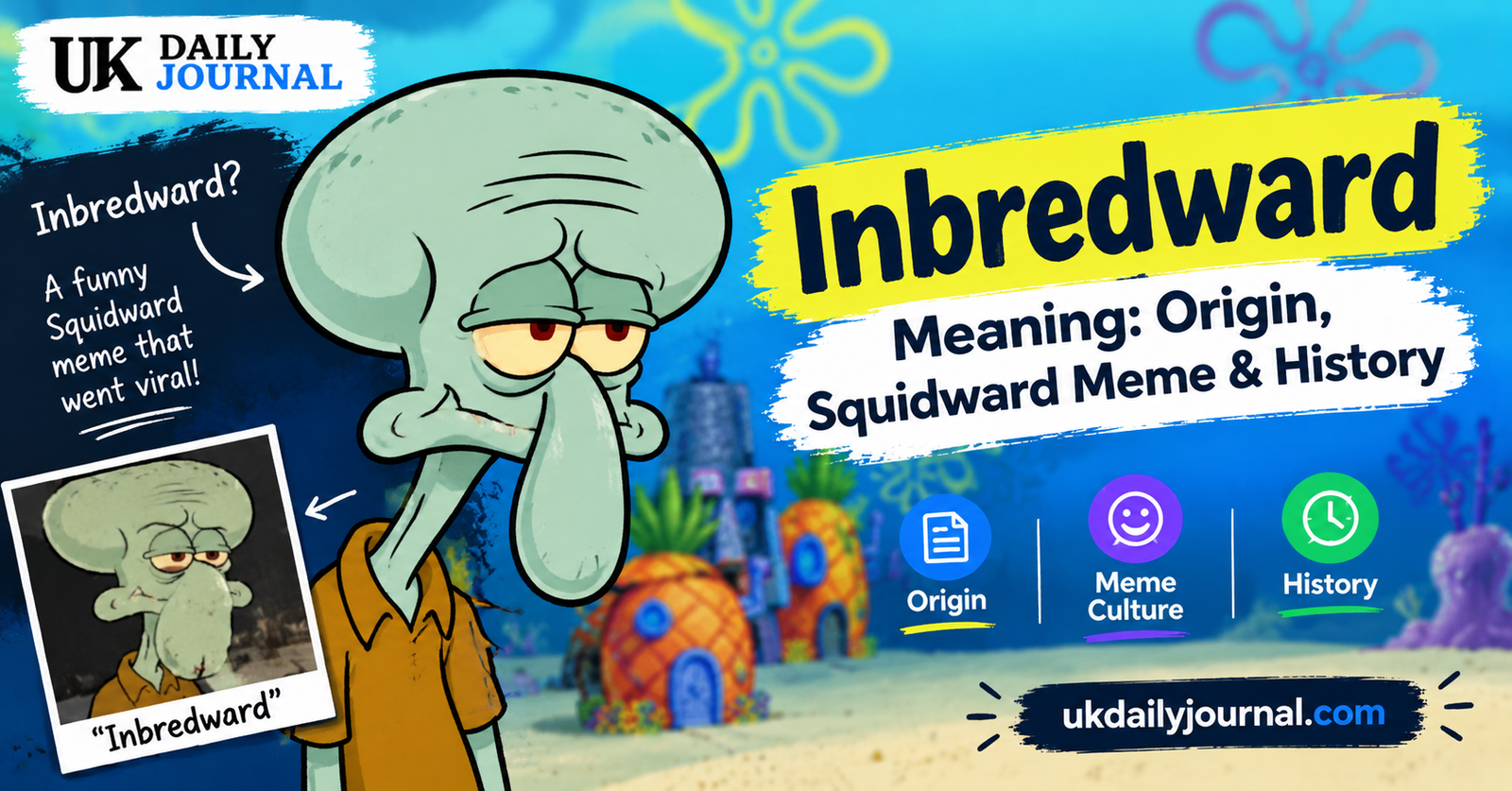
You scroll through a comment section and spot a strange word under a warped cartoon face. The word is Inbredward. You pause, then you search for it. That is how most people meet this term. They want a clear answer, and they find rumors instead.
This guide gives you the facts in plain words. Inbredward is internet slang tied to a Squidward image. It works as a meme nickname for a twisted or badly drawn version of the character. But the word also carries an insulting edge. So we cover the slang meaning, the origin of the term, the way people use it online, and why some readers find it offensive. We also mark which claims have proof and which are guesses.
Inbredward is an online slang term. Most people use it as a nickname for a distorted Squidward image. The picture usually shows the cartoon character with uneven, stretched, or strange-looking features. Posters share it as a funny internet joke. In that setting, the word labels odd-looking images. It does not name an official episode, a toy, or a scene. It names a style of fan edit.
The slang meaning shifts with the context of use. In a meme thread, it describes a visual meme. In an argument, it can turn into an insulting nickname. That split makes the term meaning tricky. A reader who sees only the word may miss the joke. A reader who sees only the insult may miss the cartoon. So the full meaning of Inbredward depends on who says it and where.
Not really. Inbredward is not a standard English word, and no dictionary lists it. The slang dictionary meaning simply does not exist yet. The word looks like a portmanteau. It seems to blend “inbred” with “Squidward,” and the “ward” ending matches the character’s name. That kind of word formation is common in internet vocabulary. A linguistic analysis can describe the pattern, but it cannot prove who made the word or why. The word also does not name a medical condition, and readers should not treat it that way.
The Inbredward origin is unclear. No reliable source names a creator, a first post, or an exact date. Many articles repeat guesses as facts, and that creates confusion. A careful reader should doubt every confident claim. What we can say is simple. The word belongs to the Squidward meme family, and it grew from fan edits rather than from the show itself. For anyone studying a slang term origin, that is the honest starting point.
Some posts claim the word showed up around 2010. These claims often lack screenshots or links. Early meme names lived on forums, image boards, and video comments. Those places rarely keep clean records, so a date from that period is hard to prove. Treat 2010 as a claim, not a verified fact.
The link to Squidward is the one point most sources share. Squidward Tentacles is a fictional character from SpongeBob SquarePants. Stephen Hillenburg created the show, and it premiered on Nickelodeon in 1999. Squidward is the grumpy neighbor who works at the Krusty Krab. Fans have edited his face for years. The Handsome Squidward scene, from the season five episode “The Two Faces of Squidward,” set off many of those edits. Inbredward likely grew in that same crowd of pop culture reference edits, as a cartoon-inspired slang label for the opposite look.
A timeline helps separate proof from rumor. The table below lists what we can confirm and what we cannot. Only the first two rows rest on solid ground. The other rows describe claims or general patterns. Check any site that gives an exact date or creator name for the word.
| Stage | What we know | Confidence |
|---|---|---|
| 1999 | SpongeBob SquarePants premieres on Nickelodeon | Confirmed |
| Season 5 | “The Two Faces of Squidward” airs and gives fans the Handsome Squidward scene | Confirmed |
| Around 2010 | Some posts claim early use of the word | Unverified |
| Later years | Distorted Squidward edits spread across social platforms | General pattern |
| Today | No confirmed creator or first post | Unknown |
This table shows a clear gap. The show’s history is well recorded, but the word’s history is not. That gap explains why so many pages tell different stories. It also shows why a plain answer sounds more honest than a dramatic one.
Most posts describe the Inbredward meme the same way. The image starts with a Squidward Tentacles picture. Then someone bends, stretches, or redraws it. The result looks wrong on purpose. Captions often add the name to make the joke clear. As a visual meme, it depends on the contrast between a familiar cartoon and an odd edit.
These traits show up again and again, though meme makers add their own twists:
No. Many distorted Squidward images carry other names. Some fans call them cursed Squidward, and others label them by the joke inside the picture. The name belongs to images whose posters choose that label. So the word follows the caption, not the picture. A strange-looking Squidward only becomes this meme when people call it that. This point matters for anyone who wants to write about the Inbredward meme with care.
Handsome Squidward is the better-known cousin. It comes from the season five episode “The Two Faces of Squidward.” In that scene, SpongeBob hits Squidward with a door, and Squidward ends up unexpectedly handsome. Fans turned that moment into a long-running joke. Inbredward flips the idea. It uses an exaggerated Squidward instead of a polished one, which makes it a clear case of character parody.
| Variation | Source | Look | Tone |
|---|---|---|---|
| Handsome Squidward | Episode scene, edited by fans | Smooth, attractive face | Playful, boastful |
| Inbredward | Fan-made edits, no official source | Warped, uneven face | Mocking, often rude |
| Sigma Squidward | Edits tied to sigma male memes | Squidward in sigma-style clips | Ironic |
| Squidward Community College | Photoshopped building image | Building with his face on it | Absurd |
In a way, yes. People often place the two side by side in comparison memes. Handsome Squidward stands for the best case, and Inbredward stands for the worst. But the match is not exact. Handsome Squidward has a clear episode behind it. Inbredward has no such source, and its insulting side makes it riskier to share.
Humor often comes from surprise. A familiar cartoon face appears in a twisted form, and the mind reacts. That clash makes many viewers laugh. Internet humor also rewards shared jokes. When people know the original character, they get the joke in seconds. They need no long setup.
Squidward is a cartoon character that millions of people know. His grumpy face is simple and easy to edit. Because the base image is familiar, any change stands out fast. That is why a small edit can feel funny and easy to share.
Poor art can be part of the joke. A rough edit signals that the maker does not take the image seriously. Viewers read that cue and relax. The result is a funny word online paired with a silly picture. Still, not everyone laughs. Some viewers react to the label, not the art.
Meme culture runs on remixing. People take a known image, change it, and add a new name. Each change forms a new branch of the same tree. Inbredward sits on one of those branches. It shows how an online trend can start from a single odd edit.
A known character carries built-in meaning. Viewers do not need a manual. They see Squidward and fill in the mood. That shortcut makes remixes spread across social media language and group chats at high speed.
A short, strange word is easy to type, repeat, and search. That helps a viral internet term travel across platforms. Yet speed has a cost. When a name moves quickly, people lose the context. New viewers see the word without the joke, and misinterpretation follows.
People use the word in a few clear ways. The context of use decides the tone. In one thread it reads as light humor. In another it lands as an attack. Here are the main patterns:
Gaming chats and social feeds show all four patterns. Short, informal online expression spreads fast in those spaces. A player may call a silly play an “Inbredward moment.” Another may use the word as a gamertag. These uses stay inside online communication, and they rarely follow strict rules.
Most readers should use this word with care. Still, examples show how it works as informal language. These meme-only uses aim at images, not people:
Avoid using it on a person. Calling someone Inbredward turns a cartoon joke into a personal insult. Lines such as “You look like Inbredward” or “Don’t be such an Inbredward” target people, and they can hurt. When you want a joke, aim it at the picture, not at a face or a family.
The answer is both, depending on use. As a label for a cartoon edit, many people see it as harmless. As a label for a person, it becomes potentially offensive language. The root word “inbred” is the problem. People have long used it as an insult toward rural families, people with disabilities, and others. That use feeds harmful stereotypes. So the word can sting even when a meme sits behind it.
Think about disability-related language here. Insults that point to disability or family background hurt real people. Inbredward is also not a medical condition, and using it that way spreads a false idea. Respectful online communication asks you to pick the cartoon over the person. When in doubt, skip the label. Sensitive terminology rarely needs a rude shortcut, and your joke works without it.
No. Inbredward is an unofficial character at best. No public record shows that Nickelodeon or the show’s makers ever used the name. Squidward Tentacles is the only official figure in this story. Inbredward lives in fan culture as a nickname for edited images, and it has no place in the SpongeBob SquarePants cast list.
Some sites present it like a lost episode or a hidden cast member. Those claims have no proof. Fan-made labels can feel real because people repeat them often. Still, repetition does not create an official record.
Finding an original is hard. The meme has no confirmed first post, so no single image can claim the title. A good test is to check dates and links. Look for the earliest upload, then compare it with reposts. Reverse image search tools can help, and archive sites can show old pages. Each step brings you closer to the real Inbredward origin, even if it never gives a final answer.
Many pages guess because they lack facts. Some writers copy each other, and errors spread. Others add details to sound sure. As a result, one site says the word began on a forum, and another blames a video. Treat those stories as claims. A careful meme explanation says what is known and says what is not.
Curiosity drives most searches. People see the word in a comment, a username, or a video, and they want the meaning of Inbredward. Unusual words with a distinctive spelling also trigger doubt. Readers wonder if the word is a joke, a slur, or a name. That mix of humor and unease pushes them to look it up. Digital slang moves fast, so even active users can miss a new term.
Start with the context of use. Note where you saw the word and who used it. Then check trusted meme databases and news archives. Compare at least two sources. Look at dates, and look for screenshots. Skip pages that sound sure but cite nothing.
One mistake is treating a joke as fact. Another is reading the word as a medical term. People also assume one meaning fits every setting. Slang shifts fast, so a meaning from one community may fail in another. Good contextual interpretation means checking the setting before you judge the word.
Inbredward belongs to a family of Squidward nicknames. Related names include Handsome Squidward, Sigma Squidward, and Squidward Community College. Each one starts with a real character and adds a twist. This kind of character name parody is common in online language trends. It follows a simple pattern: a familiar name, a small change, and a new meaning.
Not every similar term carries the same weight. Handsome Squidward is playful and clear. Inbredward leans harsher. Comparing them helps you choose your words with care.
Inbredward is a meme nickname, a piece of internet slang, and a debated word. It points to a distorted Squidward image, and it grew from fan edits. No source proves who coined it or when. That gap matters, so readers should not trust bold claims.
The safest way to use it is also the simplest. Keep it about cartoon images, never about people. Choose respectful language when the topic touches family, health, or disability. A joke stays funny when it does not hurt anyone. Share the meme with context, and the word will do less harm.
Inbredward is an internet slang term for a distorted or strange-looking Squidward image. People use it as a meme nickname. It is not an official SpongeBob character, and no dictionary lists it.
No one knows. No reliable source names the creator or the first post. Pages that claim a name usually give no proof, so treat them with doubt.
Some posts claim it appeared around 2010. No screenshots or archives confirm that date. The honest answer is that the first use remains unverified.
No. Handsome Squidward comes from the episode “The Two Faces of Squidward” and shows a good-looking Squidward. Inbredward comes from fan edits and shows a distorted one. People often use them as opposites in comparison memes.
It can be. Aimed at a cartoon image, many people treat it as a joke. Aimed at a person, it becomes potentially offensive language because it echoes insults tied to disability and family background. Choose respectful language when you are unsure.