Physical Address
304 North Cardinal St.
Dorchester Center, MA 02124
Physical Address
304 North Cardinal St.
Dorchester Center, MA 02124

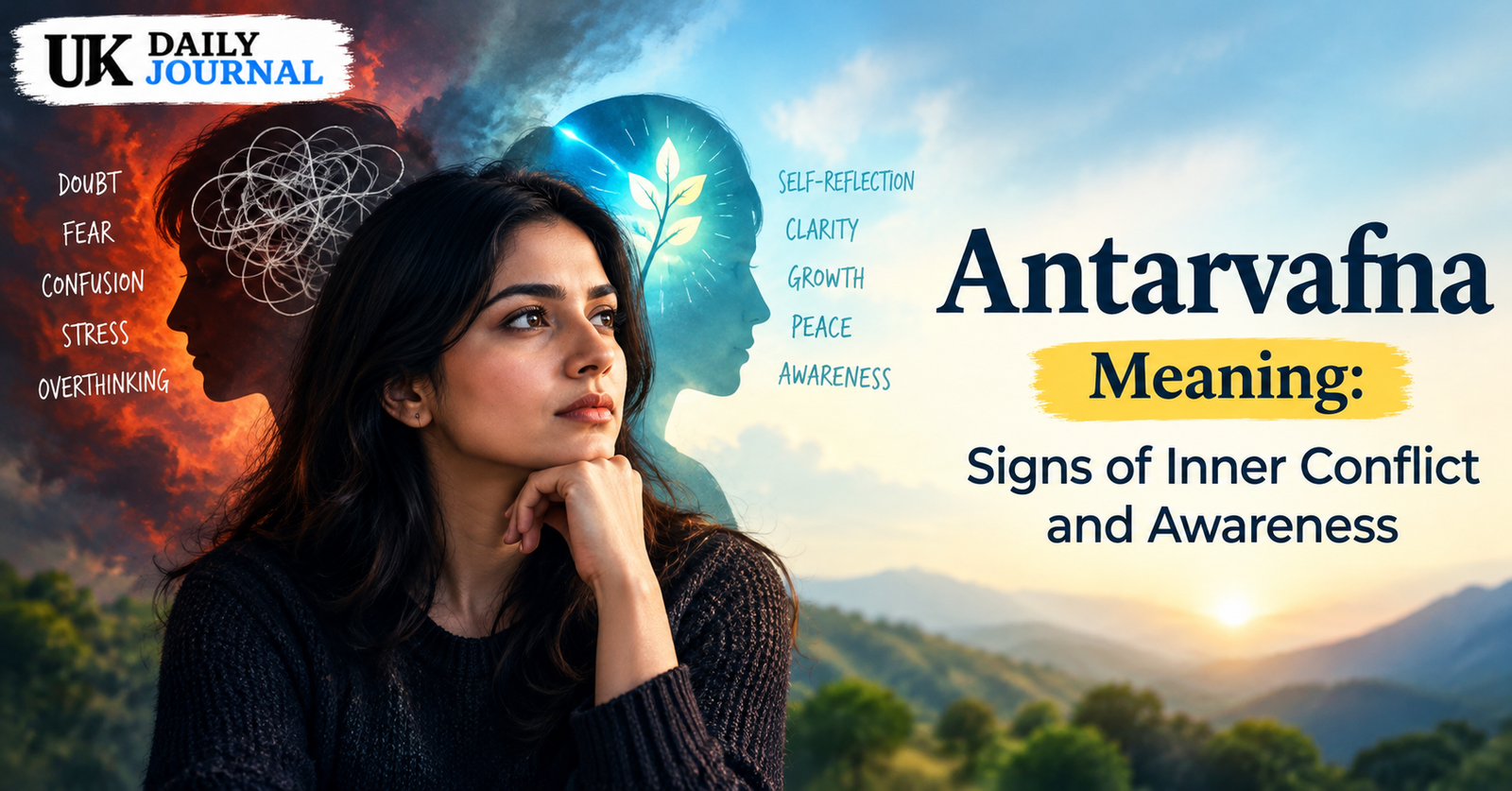
You say yes to a plan, yet part of you wants to say no. You chase a goal, yet something inside pulls you back. Some modern writers call this tug-of-war antarvafna. This guide explains what the word means, where it comes from, and how to work with it. You will also learn simple ways to turn that struggle into calm, clear choices.
Antarvafna is the name some writers give to inner conflict. It describes the moment when two strong pulls meet inside your mind. You want to stay, but you also want to leave. You want to speak, but you also want to keep quiet. This tension creates mixed feelings and sometimes real emotional turmoil. So if you ask what is antarvafna, think of it as a clear label for your inner struggle. The word helps you notice the struggle instead of ignoring it.
The idea goes one step further. It is not only about the fight. It is also about watching the fight with gentle curiosity. You stop and look within. You observe your inner thoughts without blame. Then you try to understand what each side of you wants. This is why the term links so well with self-reflection and self-awareness. In simple words, antarvafna is the struggle plus the effort to understand it.
In simple English, the antarvafna meaning is “the battle within.” It points to the clash between your desires, duties, fears, and values. The antarvafna definition has two parts. First, it names the conflict. Next, it invites you to examine that conflict with calm attention. Some readers also call it an inner weapon. That does not mean a weapon to hurt anyone. It means awareness as a tool that cuts through confusion. For antarvafna pronunciation, most people say “un-tar-VUF-nuh.” The sound is approximate, because the word is not a standard dictionary entry.
The first half is easy. In Sanskrit, antar means inside or within. Old Sanskrit dictionaries list many words built on it, including one for a mind turned inwards. The second half, vafna, is harder. It does not match a clear root in standard Sanskrit dictionaries. Some writers link it to the idea of a weapon or a strike. Others treat it as a modern coinage. So the antarvafna origin is not fully settled. Honest writers say this openly, and this article does too.
That gap does not make the idea empty. The thought behind it matches a very old pattern. Ancient Indian tradition has long taught the habit of looking within. Teachers used self-inquiry, silence, and discernment to see the mind clearly. So the term works best as a modern, descriptive Sanskrit term for an old human habit. Treat it as a useful label, not as a proven line from an ancient text. This clear view keeps your understanding honest and builds trust with readers.
Why do people connect antarvafna with inner conflict? Because the mind rarely speaks with one voice. You may hear a bold voice that says, “Go for it.” Then a careful voice says, “Wait.” Both voices have reasons. Both want to protect you. When neither one wins, you feel stuck. That stuck feeling is the inner battle. It drains energy and clouds your judgment. It also shows up in the body as a tight chest, a heavy head, or restless sleep.
Your internal dialogue shapes this battle. Self-talk can be kind or harsh. A harsh voice turns a simple choice into a fight. A kind voice makes room for both sides. When you start observing thoughts as they arrive, the battle softens. You stop joining one side blindly. Instead, you listen to each voice in turn. This small shift sits at the heart of the practice. You become the witness, not the soldier.
No. Antarvafna is not a clinical term. You will not find it in psychology textbooks or diagnostic manuals. It is a cultural and spiritual idea, not a medical one. Still, it describes real mental events that psychologists study. It works as a psychological concept in a loose, everyday sense. So use it as a reflection tool, and do not use it to label a disorder. If you face heavy distress, a qualified professional can offer proper care and guidance.
Psychologists describe cognitive dissonance as the discomfort of holding two clashing beliefs. For example, you value health, yet you skip every workout. That gap creates mental conflict. Antarvafna names a similar feeling in plain words. Research on emotional awareness also helps here. People who can name a feeling often handle it better. So labeling your mixed feelings is a real first step toward emotional regulation. It calms the mind and supports your mental well-being.
Duty and desire clash often. Duty says, “Do what is expected.” Desire says, “Do what you love.” A young person may want to study art, yet the family expects a medical degree. A parent may want a quiet evening, yet work calls. These are common antarvafna examples. Neither side is wrong. The pain comes from having to choose. This is one of the oldest forms of inner struggle, and it appears in stories across the world.
Some desires hide below the surface. Subconscious thoughts push you in ways you do not see. You may say you want a promotion, yet dread the extra work. That gap is a hidden desire at play. Internal pressure grows when you ignore it. It comes out as irritability, delay, or sudden doubt. Turning inward helps you spot these signals early. Then you can decide with open eyes.
Social expectations are loud. Friends, family, and social media all share opinions. Your own values are quieter. When the two clash, you feel torn. For example, you may value honesty, yet your group prefers silence. Write your values down in plain words. Then compare them with what others expect. This step brings clarity. It also builds self-understanding, which makes tough choices easier.
Indian thought has a long history of inner reflection. Texts speak of viveka, which means discernment between what lasts and what passes. They also speak of sankalpa shakti, the power of a firm resolve. Practices like self-inquiry ask a person to look at the one who thinks. These ideas form the spiritual awareness behind the modern word. They show why the term feels familiar, even though the word itself is new. Many people see it as part of an ancient practice of looking within.
The Mahabharata gives the best-known story of inner conflict. Arjuna stands on the battlefield of Kurukshetra. He sees relatives and teachers on the other side. His duty as a warrior says fight. His heart says stop. In the Bhagavad Gita, he puts down his bow, confused and sad. Krishna then guides him toward clear thinking. Be clear on one point, though. The word antarvafna does not appear in the epic. The story simply shows the same human struggle.
Inner conflict shows up in thoughts, feelings, and habits. These antarvafna signs are easy to miss at first. Watch for the signs of inner conflict below:
One or two signs are normal. A long list that stays for months deserves more attention. Notice the pattern, then respond with care.
The causes of antarvafna are many. Big life choices are the first cause. Changing a career, ending a relationship, or moving to a new city all stir up mixed feelings. Family pressure is another cause. People often carry the hopes of parents or elders. Fear also plays a big role. Fear of failure, loss, and judgment can freeze the mind. Together, these forces create emotional turmoil that feels hard to untangle.
Clashing values add to the problem. You may value both freedom and security. Both are good, but they pull in opposite directions. Old habits and past hurts matter too. A bad experience can make a new choice feel unsafe. Even tiredness and stress make conflicts feel bigger. So the causes of emotional struggle are often layered. Seeing the layers helps you stop blaming yourself.
Inner conflict does not stay in your head. It spills into your day. Your sleep, focus, and mood all take a hit. You may snap at people you love. You may avoid choices you must make. Understanding antarvafna in daily life starts with seeing where it shows up most. Three areas stand out.
In relationships, mixed feelings can confuse both partners. You may want closeness and space at once. You may say “I’m fine” while feeling hurt. Your partner senses the gap but cannot name it. Honest self-reflection helps here. When you know what you feel, you can say it clearly. Clear words reduce fights and build trust.
At work, the struggle often looks like doubt. You want the promotion but fear the pressure. You like your team but dislike your role. This split lowers focus and slows decision-making. It can also fuel stress. A short pause to name the conflict often brings quick relief. Then you can weigh pros and cons with a calmer mind.
Family life adds loyalty to the mix. You may love your family, yet want your own path. You may feel torn between elders and children. These ties run strong, so the pull is strong too. Talk with trusted people and share your inner state. A calm talk often shows that others feel torn as well. You are not alone in this.
Modern life adds new fuel. Social media shows you the best parts of other lives. You compare, and doubt creeps in. Endless choices also drain you. Which job, which phone, which path? Notifications cut your focus into pieces. In this noise, your inner voice gets lost. Many people feel restless without knowing why. Their inner world is crowded, and no one taught them to sit with it.
Digital life also hides the signal. A scroll fills every empty moment, so you never hear your own thoughts. Yet those thoughts hold clues about what matters. Small breaks help. Put the phone down for ten minutes. Sit, breathe, and listen. This habit supports modern well-being, and it costs nothing. It returns your attention to your inner landscape, where your real answers live.
Self-awareness is the base of this whole idea. It means you see your thoughts, feelings, and actions as they happen. Antarvafna and self-awareness go hand in hand. You cannot manage a conflict you cannot see. Emotional awareness comes next. It means naming what you feel, such as anger, fear, or sadness. Naming turns a vague storm into something you can work with. This is how deep self-awareness grows, one honest observation at a time. It also shows the importance of self-awareness in every part of life.
Emotional intelligence builds on these skills. It adds the ability to read others with care. It supports emotional resilience and emotional regulation, which help you recover after hard days. Here is a simple method for understanding emotions. Pause. Name the feeling. Ask what it wants you to know. Then choose your response. This takes about one minute. With practice, it becomes natural. Over weeks, you will react less and respond more.
Reflection and overthinking look alike, but they act very differently. Reflection moves you forward. Overthinking keeps you stuck. Reflection asks, “What can I learn?” Overthinking asks, “What if everything goes wrong?” The first brings calm. The second brings dread. Knowing the difference protects your mental well-being. It also keeps antarvafna useful instead of harmful.
| Point | Healthy Reflection | Overthinking |
|---|---|---|
| Focus | Learning and understanding | Fear and “what if” thoughts |
| Tone | Gentle curiosity | Harsh self-criticism |
| Time | Short, planned sessions | Long loops, often at night |
| Result | Clarity and a next step | Anxiety and delay |
| Body | Calmness | Tension |
Use a simple test. After ten minutes of thinking, check how you feel. Do you see one small next step? Then you are reflecting. Do you feel more anxious with no step in sight? Then you are looping. Stop, take a walk, or write the thoughts on paper. Come back later with a fresh mind. Reflective thinking works best in short, calm sessions.
You cannot remove inner conflict, and you do not need to. The goal is to meet it with skill. Managing inner conflict starts small, stays kind, and repeats daily. The steps below build on each other. Each one supports mental clarity, calmness, and inner peace. You can use them alone or together. This is also a clear answer to how to achieve inner peace without big changes.
Pick a quiet spot and sit for five minutes. Breathe slowly. Begin observing thoughts as if they were clouds passing by. Then observe emotions and sensations in the body. Do not judge anything. This non-judgmental awareness is the core antarvafna practice. If your mind wanders, bring it back gently. Witnessing thoughts and witnessing emotions this way builds non-reactive awareness. A short awareness exercise like this, done daily, trains your attention.
Writing slows the mind. Keep a notebook by your bed. Write freely for ten minutes. Use journaling prompts such as these: What am I avoiding? What do I want? What do I fear? What would I tell a friend in this spot? Self-reflection questions like these bring hidden thoughts into the light. Read your pages after a week. You will spot thought patterns and behavior patterns you missed. Over time, your internal dialogue becomes easier to hear and to guide.
Mindfulness practice teaches you to stay with the present moment. Introspection asks you to look into your own motives. Together they form a strong pair. Try a mindful self-check three times a day. Ask: what am I feeling now, and where do I feel it? This quick mindfulness technique supports mindful living and emotional balance. For many people, it eases stress and worry. It is not a medical cure, but it can support healing alongside proper care.
People often ask how antarvafna differs from meditation. Meditation is a set practice with a method, such as breath focus. Mindfulness is the skill of present-moment attention. Antarvafna is more of an inner theme. It asks you to face your own conflicts with honesty. Think of it as a meditation alternative for days when sitting still feels hard. It borrows from both. It also adds one question: “What is really pulling me apart?”
Many people make the same errors when they first look within. Watch for these:
Each mistake pulls you away from gentle curiosity. Fix them by staying kind and keeping sessions short.
Habits grow from small steps. Link your reflection to an existing habit, such as morning tea. Start with five minutes. Add one minute each week if you like. Track your days on a simple calendar. Missing a day is fine. Just begin again. After a month, you will likely notice more calm and clearer choices. Willpower and determination help, yet kindness keeps the habit alive. Daily reflection works best when it feels light, and reflective thinking stays sharp when you rest between sessions.
Yes, it can. Conflict is uncomfortable, but it also points to what matters. When you face it, you grow. You learn your limits. You learn your values. You gain inner strength because you stop running from yourself. This is why many people link antarvafna and personal growth. Each honest look within is a small act of self-development. Over time, self-discovery builds a steady sense of who you are. That steadiness brings a quiet inner resolve and a silent resolve that needs no show.
The main antarvafna benefits include:
These gains support self-improvement, self-growth, and spiritual growth. They also show the benefits of introspection in plain terms.
Clear choices come from clear minds. When you understand both sides of a conflict, you decide with less regret. You can weigh facts and feelings together. Your discernment grows, so you spot what is real and what is fear. This sharper judgment speeds up decision-making and lowers stress. Antarvafna for clarity works like a filter. It removes the noise and leaves the choice. In the same way, antarvafna for emotional balance helps you pause before you react.
Turn conflict into clarity with three questions. What do I truly want? What am I afraid of? What is one small step I can take today? Answer them in writing. Then act on the step. Action turns insight into change. Antarvafna for anxiety and stress works the same way. It will not erase worry. It can, however, help you meet worry with calmness and a plan.
Self-reflection helps, but it has limits. Some struggles need outside support. Speak with a trusted person or a mental health professional if you notice any of these: low mood for weeks, panic, trouble sleeping, or thoughts of harming yourself. If you are in danger, contact your local emergency services right away. Mental health awareness means knowing when to ask for help. Asking is a sign of inner strength. A therapist can offer tools that fit your story. Reflection and professional care work well together. Both support holistic well-being, psychological balance, and real emotional healing.
Antarvafna names a very human struggle: the pull between what you want, what you owe, and what you fear. The word is modern, and its exact origin remains open. Yet the idea is old and useful. By looking within, observing your thoughts and feelings with gentle curiosity, and acting on small steps, you turn inner conflict into insight. Start today with five quiet minutes. Notice what you feel. Write one honest line. Over time, these small acts build mental clarity, emotional resilience, and lasting mental peace.
Antarvafna is a modern term that most writers link to inner conflict. It describes the clash between desire, duty, and fear inside the mind. It also points to the act of observing that clash with calm attention. The word is not a standard dictionary entry.
It is built from Sanskrit-style parts. Antar means within. The meaning of vafna is unclear, and standard Sanskrit dictionaries do not list antarvafna. So it is best seen as a modern word that draws on Sanskrit roots and old Indian ideas of self-inquiry.
No clear record shows the word in the epic. However, the Mahabharata contains a strong example of inner conflict. Arjuna’s doubt before the battle in the Bhagavad Gita matches the theme well. Many readers use that story to explain the idea.
It is not a clinical term. Still, it overlaps with ideas such as cognitive dissonance, introspection, and emotional awareness. Psychology studies how people notice and manage mixed feelings. Antarvafna offers a simple, everyday name for that experience.
Start with short daily reflection. Sit quietly, observe your thoughts and emotions, and write them down. Name each feeling and ask what you need. Keep sessions brief and kind. If the struggle lasts or harms your daily life, talk with a trusted person or a professional.





[…] text-to-image generators run on generative AI. The AI image model learns from huge sets of pictures and captions. It uses deep learning, machine learning, image […]