Physical Address
304 North Cardinal St.
Dorchester Center, MA 02124
Physical Address
304 North Cardinal St.
Dorchester Center, MA 02124

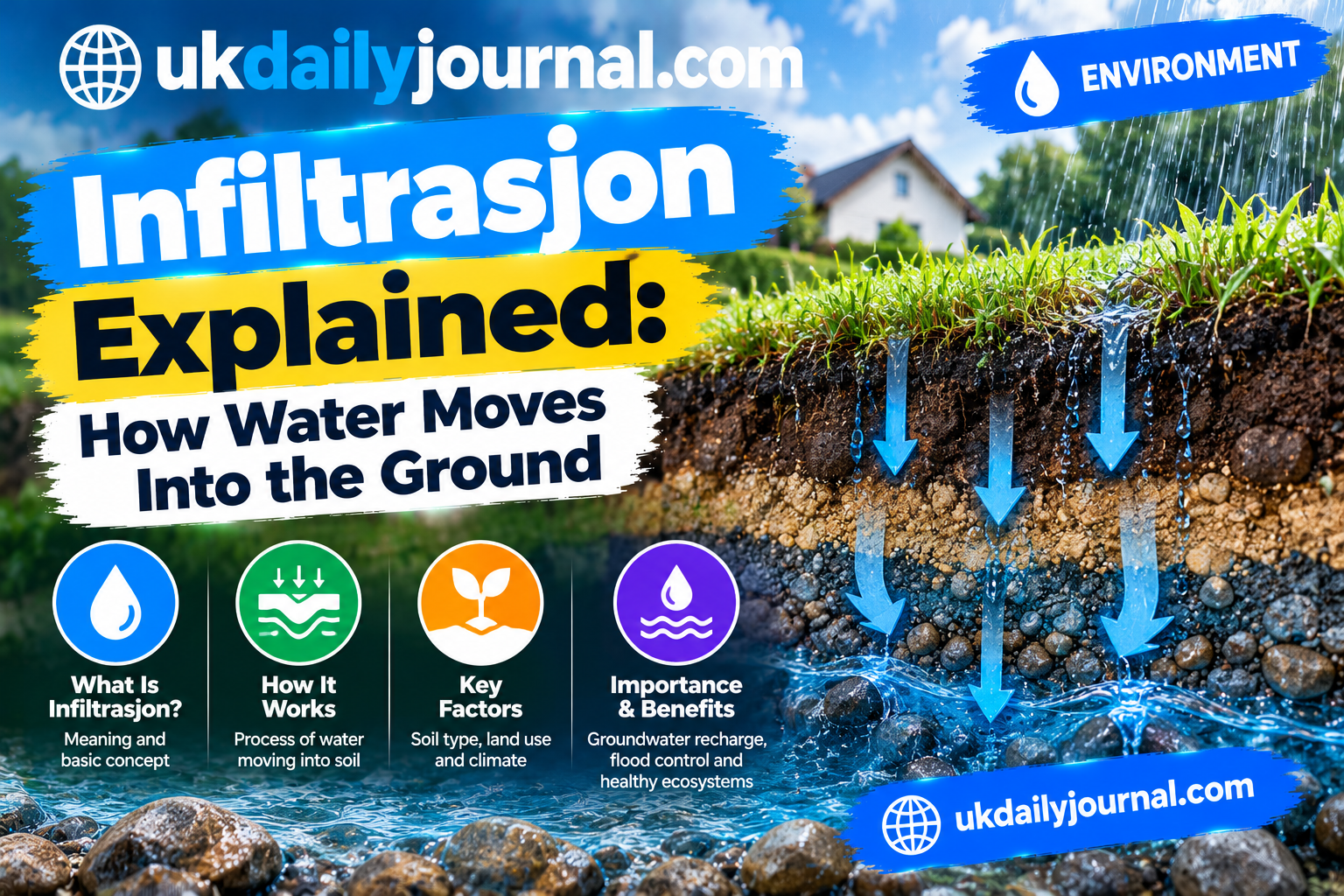
Rain falls on a field, and the ground looks wet for a moment. Then the water vanishes. Where does it go? The answer is infiltrasjon. This is the Norwegian word for infiltration. It means water entering soil from the ground surface. People ask “what is infiltrasjon” because the word sounds technical. The infiltrasjon meaning is simple, though. Water soaks into the ground and starts a long journey below your feet.
Scientists in environmental science, earth science, and geography all study this process. It is a natural water process that runs every day. Without it, rivers would flood after every storm. Plants would also struggle to find water. This infiltrasjon explained guide covers the basics in plain words. You will learn how the process works, what changes its speed, and why cities and farms care about it.
| Norwegian term | English meaning |
|---|---|
| nedbør | rainfall |
| snøsmelting | snowmelt |
| avrenning | runoff |
| grunnvann | groundwater |
| jordart | soil type |
| løsmasser | loose soil deposits |
| permeabilitet | permeability |
| vannkretslopen | the water cycle |
The infiltration process starts at the ground surface. Rain or melting snow lands on the soil. Water then moves into small gaps between the soil particles. This is the water movement into soil that feeds plant roots. Each drop follows a path of least resistance. Dry soil pulls water in fast. Wet soil slows the flow. That is why the first minutes of a storm often bring the fastest infiltration of water.
Surface water does not always enter the ground. If the soil is full or blocked, the water stays on top. It then flows downhill as runoff. Think of a sponge. A dry sponge drinks water quickly. A soaked sponge cannot take any more. The ground works the same way. Water absorption in soil depends on how much room is left in the pores.
Two forces drive water entering the ground. Gravity pulls water down through the soil. This is the main driver of the downward movement of water after heavy rain. Capillary action works differently. It pulls water into tiny pores and pushes it in all directions, even sideways and upward. These capillary forces in soil hold moisture close to plant roots.
Gravity and water movement work together. Gravity moves water quickly through large gaps. Capillary action moves it slowly through small gaps. In sandy soil, gravity wins. In clay soil, capillary action wins. This balance explains why sand drains fast and clay stays wet. Both forces keep water moving until the soil reaches its limit or the water meets a hard layer.
Hydrology is the study of water on Earth. Infiltration in hydrology is a key link in the hydrological cycle. Water evaporates from oceans, forms clouds, and falls as rain. Then it either runs off or soaks in. Norwegians call this big loop vannkretslopen. The water cycle process has no start or end. Infiltration moves water from the surface into the soil. After that, the water can reach streams, lakes, or deep storage.
This step matters because it splits rainfall into two paths. One path leads to rivers. The other path leads underground. Hydrological processes in a drainage basin depend on this split. A watershed with healthy soil holds more water. A watershed with sealed, hard ground sends water to rivers in a rush. Water movement in drainage basins and water movement in watersheds both follow this simple rule. More infiltration means calmer rivers and steadier streams.
Soil is not solid. It has tiny spaces between soil particles, and these spaces form a network of pores. Water flow through pores is slow but steady. Porous soil, such as sand and loam, lets water pass with ease. This is water passing through soil. The soil also filters the water as it moves. Dirt, germs, and some chemicals stay behind in the particles. This is water filtering through soil, and it is one reason spring water often tastes clean.
Rock works in a similar way. Porous rock, such as sandstone, holds water in its pores. Hard rock has cracks in rocks, and water travels along these cracks. Norwegians describe this as vann i fjell, or water in rock. In the same way, vann i jord means water in soil. Water movement through rock is slower than water movement through soil. Still, over many years, water percolating through rock can travel far. Scientists call this water movement in porous media, and the same rules apply to sand, gravel, and stone.
Soil forms layers, and each layer treats water differently. The shallow soil layer holds roots, leaves, and living matter. It takes in water first. Deeper soil layers hold less life but more minerals. Subsoil water movement is slower there. Soil moisture is the amount of water held in these layers. Water storage in soil acts like a bank account for plants. Water stored in soil layers feeds crops during dry weeks.
Below the soil, two zones matter. The unsaturated zone, also called the vadose zone, holds both air and water in its pores. Under it lies the saturated zone, where every pore is full. The top edge of that zone is the water table. Water reaching the water table joins the groundwater. Scientists describe saturated and unsaturated soil by this simple test: are the pores full or not? Soil saturation is the point where the ground can take no more water. Subsurface water, or underground water, lives below this line.
Several water terms sound alike, but each has its own meaning. Infiltration vs percolation is the most common mix-up. Infiltration is water entering the soil from the surface. Percolation is water moving down through the soil after it has entered. Seepage is slow water flow through soil or rock. The Norwegian word sigevann often means water that seeps out of a waste site or a slope. Each term describes a different step of the same trip.
Infiltration vs runoff is another key pair. Runoff is water that flows over the ground instead of into it. Surface runoff grows when rain falls faster than soil can drink. It also grows on hard ground, such as roads and roofs. Water absorption and runoff always compete. When one goes up, the other goes down. Understanding these words helps you read maps, reports, and flood studies with more confidence.
| Term | What it means | Where it happens |
|---|---|---|
| Infiltration | Water enters the soil | At the ground surface |
| Percolation | Water moves down through soil | Inside soil and rock |
| Seepage | Slow flow through pores or cracks | Slopes, banks, soil edges |
| Runoff | Water flows over the surface | On top of the ground |
The infiltration rate is the speed at which water enters the soil. Experts usually give it in millimeters per hour. Dry soil starts with a high rate. As the soil fills, the rate drops and settles at a steady value. Infiltration capacity is the highest rate a soil can take at a given moment. If rain falls faster than this limit, the extra water becomes runoff. Soil’s ability to absorb water therefore sets the line between a safe storm and a flood.
Field workers use simple tools to check water infiltration rate measurement. The most common tool is a ring infiltrometer. A person pushes a metal ring into the ground and fills it with water. Then they time how fast the level drops. Rainfall simulators and soil probes offer other options. Engineers use these numbers to design drains, ponds, and fields. Good data prevents costly mistakes, such as a pond that never drains.
Soil texture means the mix of sand, silt, and clay. Sand has large particles and big gaps, so water enters fast. Clay has tiny particles and narrow gaps, so water enters slowly. The impact of soil texture on infiltration is large. A sandy field can take in dozens of millimeters per hour. A clay field may take in less than five. Soil structure matters too. Crumbly soil with small clumps has many channels. Packed soil has few. Soil composition, including organic matter, adds even more change.
The same idea applies to the Norwegian words jordart and løsmasser. Jordart describes the soil type. Løsmasser means loose deposits, such as gravel, sand, and glacial till. Each type has its own pattern of water flow. Infiltration and soil type go hand in hand. Knowing your soil type lets you predict how your land will handle heavy rain. A simple soil test can tell you the answer before you build anything.
Permeability is how easily water passes through a material. Soil permeability and rock permeability both control water movement. Permeable soil, such as coarse sand, lets water flow fast. Permeable rock, such as fractured limestone, does the same. Dense clay and solid granite have low permeability. The Norwegian term permabilitet is written permeabilitet, and it carries the same meaning. Infiltration and permeability are closely linked. High permeability usually means a high infiltration rate. Low permeability means water waits on the surface.
Plants help water enter the ground. Roots open small channels in the soil. When roots die and rot, they leave holes behind. Leaves and plant litter also protect the soil from rain. Without this cover, raindrops hit bare soil and seal the pores. The role of vegetation in infiltration is therefore simple. More plants mean more open soil. Vegetation and infiltration go together in forests, meadows, and gardens.
Land cover changes the picture further. The impact of land cover on infiltration can be huge. A forest floor can take in rain at a very high rate. A parking lot takes in almost none. The land surface of towns and cities is often covered with asphalt and concrete. Farmland falls in the middle, and the result depends on tillage and crops. Planting trees, grass, and shrubs is one of the cheapest ways to raise infiltration on a site.
Rainfall and infiltration are tied closely together. Light rain soaks in slowly and fully. Heavy rain overwhelms the soil. Rainwater infiltration works best when drops fall softly on open ground. The nedbør, or precipitation, in Norway often arrives as sudden showers or steady autumn rain. Each pattern calls for a different response. Rainwater absorption by soil is high at first and falls as the ground fills. That is how heavy rain turns into overflowing creeks.
Snowmelt infiltration follows its own rules. Snøsmelting in spring can release huge amounts of water in a short time. If the ground below is frozen, the meltwater cannot enter the soil. It runs off instead, which is called avrenning in Norwegian. Frozen or already saturated ground creates a high risk of flooding. Urban runoff and infiltration are also linked. Roofs and roads send water straight into drains, and overflowing drains cause floods. Healthy overflatevann management slows this rush of water.
Groundwater recharge is the process that refills aquifers. Water enters the soil, moves down, and reaches the water table. This groundwater recharge process is slow. It can take days in sand and years in dense rock. Grunnvann, the Norwegian word for groundwater, supplies wells, springs, and many rivers. Infiltration and groundwater are therefore deeply connected. Without infiltration, groundwater would shrink every year. Natural replenishment of groundwater depends on rain, snow, and open soil.
Many towns draw drinking water from underground sources. Grunnvannsreserver, or groundwater reserves, can be huge. Even so, they are not endless. Pumping more water than nature refills leads to falling water tables and dry wells. Replenishing groundwater supplies requires protected land where rain can soak in. Water resource management plans often set aside recharge zones for this reason. The link between surface water and groundwater runs both ways. Surface water to groundwater flow feeds aquifers, and groundwater flow can feed rivers in dry months.
Cities create a problem for the water cycle. Hard surfaces block infiltration, and stormwater rushes to drains. Stormwater infiltration solves part of this problem. It guides rain into the ground near where it falls. Engineers call this approach sustainable water management. Drenering, the Norwegian word for drainage, now often includes local infiltration. This protects pipes, lowers flood risk, and refills groundwater. It also supports water conservation in dry summers.
Designers have many tools. Some are small, and some cover whole streets. Each tool lets rain soak in instead of racing away.
A good plan starts with a soil check. Clay-rich ground may need larger basins or an overflow pipe. Sandy ground drains faster and suits compact designs. Maintenance matters as well. Leaves, silt, and trash can block the system within a few years.
In Norway, a special system uses the same idea for wastewater. People call it an infiltration anlegg or infiltrasjonsanlegg. A septic tank first collects the household waste and separates the solids. Then the liquid flows into a bed of sand or gravel. The soil cleans the water as it slowly passes through. This is infiltration in wastewater treatment. Avløpsvann infiltrasjon works well in homes without a public sewer, such as cabins and rural houses.
The soil acts as a natural filter. Tiny organisms in the soil break down waste and germs. This protects groundwater, wells, and nearby streams. However, the system only works in suitable ground. The soil must be neither too tight nor too coarse. It must also sit above the water table and away from wells. A poor design can pollute the area. For that reason, local rules require a soil test and a licensed plan before building any infiltrasjonsanlegg.
Farmers depend on water infiltration in agriculture every day. Soil that takes in rain well stores more water for crops. This reduces the need for watering. It also lowers erosion because less water runs over the field. Many growers use cover crops, mulch, and no-till methods. These steps feed the soil, protect its surface, and keep pores open. The result is better yields in dry years and less mud in wet ones.
Soil and water conservation goes beyond one farm. It protects streams, lakes, and the wider environment. Runoff carries soil, fertilizer, and sprays into rivers. Better infiltration keeps those materials on the field. Water conservation also saves money. Farms with strong soil moisture rely less on pumps and wells. Local councils often support these methods through training and grants. A small change in soil care can make a large difference to a whole drainage basin.
Many things can slow infiltration. Compaction is the most common. Heavy machines, cattle, and foot traffic press the soil tight. Pores shrink, and water struggles to enter. Frozen ground and saturated soil also block the flow. Other problems come from human work. Paving, building, and removing plants all harm the soil surface. Over time, the ground loses its ability to absorb rain.
The good news is that many problems can be fixed. Loosening the soil, adding compost, and planting cover plants all help. Cities can swap hard pavement for permeable options. Fields can rest between crops. Protecting the natural drainage of a site is cheaper than repairing a flood later. Environmental water processes work best when people give them room.
Infiltrasjon is the quiet link between rain and life. It moves water from the ground surface into the soil and sometimes into rock. From there, water feeds roots, fills aquifers, and keeps rivers flowing. Soil type, plants, slope, and weather all change the speed. Humans change it too, by building, farming, and managing land. When people protect open ground and healthy soil, they protect their own water supply.
The topic reaches far beyond science class. Homeowners, farmers, planners, and builders all use these ideas. A rain garden, a cover crop, or a well-made infiltrasjonsanlegg all start with the same basic fact. Water needs a way into the ground. Give it that path, and the whole water cycle works better for everyone.
Infiltrasjon is the Norwegian word for infiltration. It describes water moving from the ground surface into the soil. In hydrology, it is the first step that lets rain and snowmelt reach plant roots and groundwater. In medicine, the same word can describe fluid or cells moving into tissue, but the water meaning is far more common.
It refills groundwater, feeds plants, and reduces runoff. Good infiltration lowers the risk of floods and erosion. It also cleans water as it passes through soil. Cities, farms, and wells all depend on it to keep the water cycle in balance.
Soil texture, soil structure, and permeability matter most. Plants, land cover, and soil moisture also play a role. Compaction, frozen ground, and heavy rain slow the process. Sandy soil with healthy plants usually shows the highest rates.
Designers build rain gardens, permeable pavement, and infiltration trenches. These tools guide rain into the ground instead of into drains. This lowers flood risk, protects pipes, and refills groundwater. A soil test comes first, because clay-rich ground drains slowly.
Yes. An infiltrasjonsanlegg treats household wastewater after it leaves a septic tank. The liquid passes through sand or gravel, and the soil cleans it. The ground must have the right permeability and sit above the water table. Local rules usually require a soil test and a licensed design.




