Physical Address
304 North Cardinal St.
Dorchester Center, MA 02124
Physical Address
304 North Cardinal St.
Dorchester Center, MA 02124

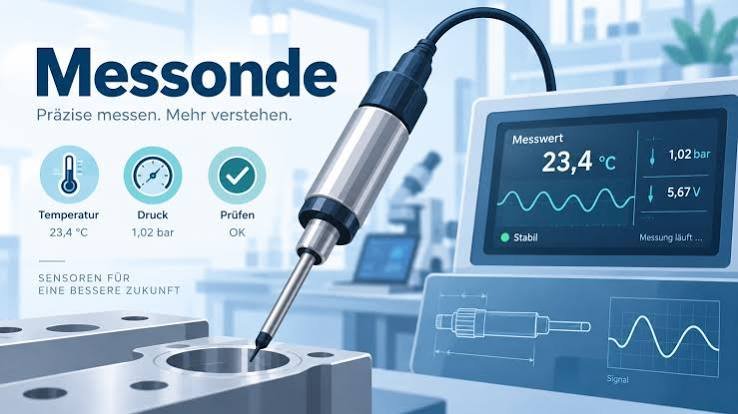
A cook pushes a thin metal spike into a chicken breast. A number flashes on a small screen. That number decides if dinner is safe or risky. The spike is a probe, and German speakers call it a Messsonde. Online, many writers spell it messonde. The word looks simple, but it covers a huge range of tools. Some sit inside a pizza oven. Others rise 30 kilometers into the sky on a weather balloon. This guide explains what the term means, how the device works, and where it earns its place. You will also learn how to pick one and keep it accurate.
Messonde comes from German. The verb “messen” means to measure. The noun “Sonde” means probe. Together, they describe a measuring probe. This tool is a measurement device that enters a space to check a condition. It might go into a liquid, a gas, a pipe, or a piece of food. Engineers also call it a measuring instrument or a detection device. All three names point to one job. The tool senses something that people cannot judge by eye. Then it reports the result in a clear form. A good probe turns a hidden fact into a number you can use.
German joins words without a gap. That is why the standard spelling is Messsonde, with three s letters. English writers often type two and get “messonde.” Search engines treat both spellings as the same idea. Both point to a technical device that measures. Some websites also use the word as a brand name or a loose digital concept. That use is rare and often vague. When you read the term, check the words around it. Terms like probe, range, and calibration signal a real instrument. Terms like login or platform signal something else.
Every probe follows the same basic path. First, a sensing element meets the thing you want to check. This could be heat, pressure, or a gas. The element reacts in a measurable way. A metal wire changes its resistance. A crystal makes a tiny voltage. A membrane lets certain molecules pass. Next, the probe turns that reaction into an electrical signal. Then a circuit cleans and scales the signal. This step is called instrument processing. Finally, a display or a computer shows the measurement reading. Many modern units send it over a cable or a wireless link. The whole chain works in a fraction of a second.
The sensing element does most of the hard work. Its material decides what the probe can detect and how well it does so. A platinum wire suits temperature. A zirconia ceramic suits oxygen. A glass bulb suits acidity. That is why one probe rarely fits every job. Makers pick the element first and build the housing around it. The housing protects the element from dirt, water, and shock. It also holds the cable and the connector. Good design keeps the element in contact with the target while it keeps everything else safe.
A messonde can check almost any physical property or chemical property you can name. The most common targets are temperature, pressure, and liquid level. Others include humidity, flow, thickness, and speed. On the chemical side, probes track oxygen, acidity, salt content, and harmful gases. Each target needs its own sensing method. A temperature probe reads heat through resistance or voltage. A pH probe reads acidity through a voltage across glass. A gas probe reads a chemical reaction at a hot or coated surface. All of them share one goal. They turn a property of the real world into instrument-readable data. Once data exists, people and machines can act on it.
The probe family is large, so a table helps. The list below covers the types you will meet most often. Each row names the target, the sensing idea, and a common home.
| Probe type | What it measures | Typical use |
|---|---|---|
| Temperature probe | Heat or cold | Kitchens, ovens, engines |
| Pressure sensor | Force of gas or liquid | Pipes, tires, hydraulics |
| Oxygen sensor | Oxygen level | Car exhausts, boilers |
| Liquid-level sensor | Height of a liquid | Tanks, wells, fuel gauges |
| Conductivity probe | Dissolved salts | Water plants, oceans |
| Gas detector | Harmful or flammable gas | Mines, labs, factories |
| Airflow probe | Air speed | Ducts, wind tunnels |
Notice that the word “sensor” shows up in several rows. Makers use “probe” for the part that enters the medium. They use “sensor” for the part that senses. In daily talk, people swap the two words all the time.
Temperature is the most measured quantity in the world. A temperature probe comes in two main styles. The first is the thermocouple. It joins two different metals and makes a small voltage when heat changes. Thomas Seebeck found this effect in 1821. A common type K thermocouple covers a very wide span, from far below freezing to about 1,260 °C. The second style is the resistance detector. A Pt100 element, for example, reads exactly 100 ohms at 0 °C and rises in a steady way as it warms. It is slower to react than a thermocouple, but it is more stable. Both styles deliver reliable heat measurement for food, factories, and labs. The USDA tells cooks to bring poultry to 74 °C (165 °F), and a quick probe makes that check easy.
A pressure sensor measures how hard a gas or liquid pushes on a surface. Inside, a thin diaphragm bends under load. A tiny circuit reads that bend and converts it to a signal. Your car tires, your phone, and a hydraulic press all rely on this idea. Altitude gauges use it too, because air pressure falls as you climb. An oxygen sensor works in a different way. In most cars, a ceramic element compares oxygen in the exhaust with oxygen in the outside air. The difference creates a voltage. The engine computer reads that voltage and adjusts the fuel mix. Bosch brought this device into car production in the late 1970s. It cut exhaust pollution and saved fuel. Today, the same technology also checks boilers, furnaces, and medical gas supplies.
Tanks hide their contents, so a liquid-level sensor tells you what is inside. Some use a float that rises with the liquid. Others send a sound or radar pulse and time the echo. Fuel trucks, water towers, and milk tanks all use these tools. Water offers many more checks. Water measurement can cover temperature, acidity, cloudiness, and dissolved salt. Conductivity is a handy shortcut for salt. Pure water conducts poorly, while seawater conducts well. Scientists use that gap to estimate salinity in oceans and rivers. Gas work is more serious. Gas detection protects miners, welders, and plant crews from leaks. A probe in the air can flag methane, carbon monoxide, or low oxygen before people feel any harm. Fast alarms save lives here.
Factories rely on industrial measurement every minute. A steel plant tracks furnace heat. A dairy tracks pasteurizing time and temperature. A chemical plant tracks pressure in reactors. Each of these jobs uses an industrial probe built for harsh conditions. The housing may be stainless steel or ceramic. The cable may carry a heat-proof coating. This field is called industrial instrumentation, and it forms the nerves of modern production.
Probes also feed process monitoring. The data flows to a controller, which compares it with a target. If the number drifts, the controller adjusts a valve, a heater, or a pump. Engineers call this loop a measurement and control system. It runs day and night with little human help. Because the loop reacts in seconds, it keeps quality steady and waste low.
Scientists use laboratory measurement to test ideas. A pH probe checks a solution. A dissolved-oxygen probe checks a fish tank or a river sample. A spectrometer probe checks a chemical mix. Small errors can ruin an experiment, so labs pick tools with tight limits. They also log every reading with a time stamp.
Outdoors, environmental monitoring follows the planet’s health. Stations track river quality, soil moisture, and air-quality measurement for dust and gases. Weather services launch radiosondes. A radiosonde is a small box with sensors that hangs under a balloon. It rises to roughly 30 kilometers and sends back temperature, humidity, and pressure. Hundreds of stations around the world launch them twice a day. Forecast models depend on that data.
These three words overlap, and that causes confusion. The table below separates them in simple terms.
| Term | Plain meaning | Key point |
|---|---|---|
| Messonde | A measuring probe | Often enters the medium it checks |
| Sensor | The part that detects a change | Can sit inside a probe or stand alone |
| Radiosonde | A balloon-borne weather instrument | Sends data by radio from the sky |
A sensor is the small detecting part. A probe is the tool that carries it to the place you need. So a messonde usually holds a sensor. A radiosonde is a special case. It also holds sensors, but it adds a radio and a balloon. It belongs to the family but serves one narrow job. If you see the word “sonde” alone, check the topic. A weather article means a radiosonde. A factory article means a probe.
Accuracy tells you how close a reading sits to the true value. Precision tells you how close repeated readings sit to each other. A probe can be precise but wrong. For example, it may read 2 degrees high every time. Good measurement accuracy needs both qualities. Calibration fixes the gap. You compare the probe with a trusted reference, such as an ice bath at 0 °C or a certified gas mix. Then you adjust the probe or record a correction. Most makers suggest a schedule, often once a year. Harsh use calls for more checks.
Several things push a probe off target. Heat can shift the electronics. Dirt can coat the sensing element. Age can wear the material down. Radio noise from motors can distort weak signals. Poor placement also hurts. A temperature probe near a wall reads the wall, not the air. Place the tip where the real condition lives, and keep it clear of drafts and hot spots.
Start with the job, not the product. Write down what you need to measure and where. Then match the tool to those facts. A few points guide most choices:
A cheap probe in the wrong setting fails fast. A well-matched one runs for years.
Good habits extend probe life. Handle the tip gently, because bends and knocks harm the element. Clean it after each use with a method that suits the material. Rinse a pH bulb with clean water and never wipe it dry. Store probes in a dry place, and keep wet-storage types in their solution. Check cables and plugs for cracks before every job.
Problems follow a few patterns:
Most faults show up early if you compare readings against a known reference. Small checks save big repairs.
Sensor technology moves fast. Probes shrink every year, and many now carry a tiny chip that stores its own calibration data. Wireless links remove long cables in tight or moving spots. Cloud tools offer real-time monitoring, so a manager can watch a tank from a phone. Software also applies automated data processing. It spots trends, flags odd values, and warns staff before a part fails. This practice is called predictive maintenance, and it cuts downtime. A digital measurement device also logs every reading without manual notes. As prices fall, smart probes now appear in homes, farms, and wearable gadgets. The core idea stays the same. A probe senses, a circuit converts, and people act on the data.
A messonde is a measuring probe. It senses a physical or chemical property and turns it into data. That simple act supports food safety, clean air, cheap fuel, and accurate weather forecasts. The word may look odd online, but the tool behind it is familiar. You now know the main types, the key uses, and the habits that keep readings honest. Match the probe to the task, calibrate it on time, and treat every number with care. Do that, and your probe will give you facts you can trust.
What is a messonde?
A messonde is a measuring probe. The word comes from German, where “messen” means to measure and “Sonde” means probe. It senses a condition, such as heat or pressure, and reports a reading.
Is a messonde the same as a sensor?
Not exactly. A sensor is the part that detects a change. A messonde is the probe that carries the sensor into the place you want to check. People often use the words as if they mean the same thing.
What is the difference between a messonde and a radiosonde?
A radiosonde is a special weather instrument that hangs under a balloon and sends data by radio. A messonde is a general term for a measuring probe, used in labs, factories, and kitchens.
How often should I calibrate a measuring probe?
Most makers suggest once a year. Heavy use, harsh settings, or strict quality rules may need checks every few months. Always follow the maker’s guide for your model.
Can a messonde measure more than one thing?
Some can. Multi-parameter probes track items like temperature, acidity, and dissolved oxygen in one body. Simple probes handle a single property, which often gives better accuracy for that one task.




